
The Heart of Slow Travel Umbria
The true beauty of Umbria can’t be discovered in a rush, you have to move at a slow pace to find all the hidden treasures of this region.
Slowly traveling through Italy’s Green Heart, I was able to discover lush hills, historic townships, and the most intriguing culture.
Disclaimer: This article contains affiliate links that help fund my living so I can sustain myself without going (extremely) broke. I promise you won’t be charged anything but your contribution definitely helps me big time! Thanks heaps!
- The Heart of Slow Travel Umbria
- Umbria Beyond Borders
- Practical Information for Every Traveler
- Navigating Umbria: Transportation and Accessibility
- Cultural Immersion: Living Like a Local
- Seasonal Experiences: The Best Times to Visit Umbria
- A Peek Into Umbria's Gems
- Specialized Travel Options in Umbria
- Umbria's Natural and Historical Tapestry
- Discovering Enchanting Towns and Villages
- Culinary Delights: Umbria's Gastronomic Treasures
- Umbria's Artistic and Architectural Wonders
- Frequently Asked Questions About Going Slow In Umbria
- What are the top attractions to visit for a complete slow travel Umbria experience?
- Can you suggest a week-long slow travel Umbria itinerary?
- What’s the best way to experience the local culture while slowly traveling through Umbria?
- What’s the best way to engage local artisans and producers when I slow travel to Umbria?
- What are some recommended accommodations for a slow travel stay in Umbria?
- How accessible are the rural areas of Umbria for slow travelers?
My Experience of Slow Travel in Umbria
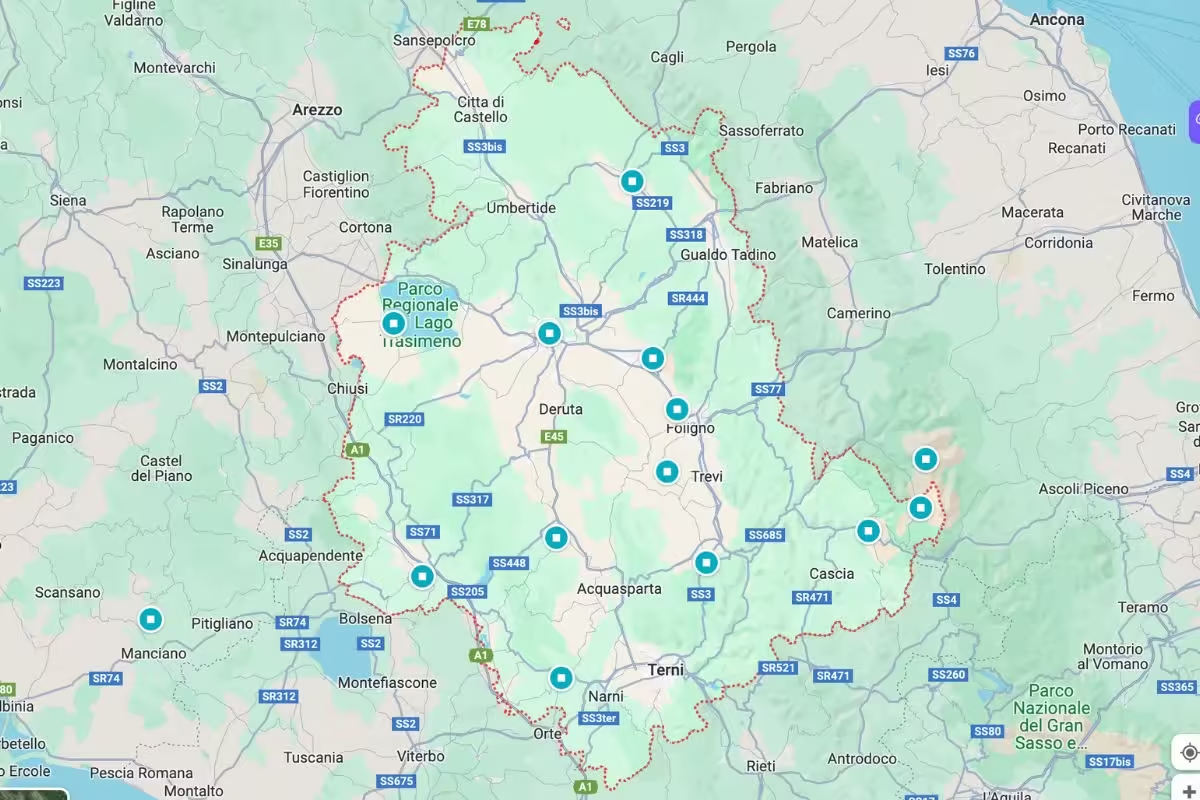
Slow travel in Umbria isn’t just another trending way to tour the region. On the contrary, it’s a way of life. My slow travel Umbria itinerary covered everything from exploring medieval villages to integrating closely with the locals.
Through that, I could see the wonders of this region through their eyes. Usually, travel itineraries are recommended based on areas, regions and places.
But in my case, I’d prefer to recommend based on interests so you can focus on the destination that most pleases your curiosity.
Like when I checked out several wineries and vineyards in this area, and thanks to the many helpful nudges I got during my visits, just because I had in mind that I wanted to refine my tastes in wine.
However, like every travel memories, every community in Umbria’s towns had something new and different to teach me and I was very grateful I didn’t breeze through the region like a regular tourist.
From wine-rich Montefalco to the truffle havens of Norcia, there was a charm to this region that immediately put me at ease, no matter where I went.
My slow life in Umbria got even more exciting because I stayed in smaller, family-run accommodations, where I met many interesting people who shared hidden gems and little-known stories about their neighborhood that I’ll treasure all my life.
Umbria Beyond Borders
While unique on several levels, Umbria shares a lot of interesting traits with its neighbors worth exploring.
Comparative Travel: Umbria, Tuscany, and Beyond
On the surface, neighboring regions like Tuscany with its stunning countryside and fine cuisine, is a carbon copy of Umbria. However, as a seasoned traveler in Italy, I could quickly see that former greenlands were more untouched and housed a stronger sense of culture and tradition.
This is likely because Umbria doesn’t have an international border, so it’s able to preserve its unique virtues better. What’s more, unlike Naples and the Amalfi Coast, Umbria seems to champion tranquility and a slow-paced lifestyle.
The difference is bigger when you compare Umbria to a place like Florence. Of course, both places have a similarly rich collection of Renaissance art and architecture.
However, the latter offers a quieter, more reflective experience that helps you savor what you’re viewing more deeply. There’s also the highly spiritual element here, something that Florence simply can’t rival.
Beyond Italy, the charm and romance of France is echoed somewhat in Umbria, too. Of course, this central part of Italy lacks the glamor of Paris and the chicness of the French Riviera. It trades all of that for the rustic appeal of extra-virgin olive groves and vineyards.
Compared to Venice, slow travel in Umbria revels in a more grounded, simpler lifestyle. This may be more appealing to some people when weighed against the winding canals and opulence of Venice.
In the end, the unique blend of art, rural beauty, and spirituality makes Umbria a one-of-a-kind spot in Italy and the world.
Practical Information for Every Traveler
When exploring this region, it’s important to have a clear plan for your lodging and have a defined slow travel Umbria itinerary. I’ve compiled a couple of tips you might find useful on that front.
Creating A Simple Activity In Every Itinerary
Designing an effective itinerary is about balancing well-known sites with hidden gems. Consider starting your journey in the bustling streets of Corso Vannucci in Perugia for a taste of lively Italian urban life.
Also, if you are someone who likes to explore everything and anything under the sun without specific preference of interest because you find everything fascinating (perks of ADHD!) then this is created for you
- Morning: Savor a traditional cappuccino at a local café, as having it post-meals is not customary in Italy. I work in the morning until lunchtime.
- Midday: Indulge in the Italian food scene. Schedule your meals according to Italian dining times—typically a later lunch around 1:00 PM. After lunch, I continued with work or just reading.
- Evening: Savor slow food and its burst of flavor. I like to eat around 6-7pm and take a slow walk after dinner.
| Pro Tip: Cycling or walking around Umbria can be a good thing as it gives you the freedom to make unscheduled stops and spontaneous detours. Remember, GPS is your ally in navigating the winding, rural roads of this enchanting region. |
Navigating Umbria: Transportation and Accessibility
The local transportation system was a big help when it came to getting to the sights I wanted to see. The region has a well thought-out layout, so taking the bus or the train was an enjoyable experience in itself. In addition, it didn’t put me at odds with the local environment, and I could enjoy myself genuinely.
Journeying by Train Through Umbria
I enjoyed train rides in the region because they were a great way to explore this gorgeous side of Italy. It was also a big boost that the railways connected major towns like Assisi and Orvieto.
I did a lot of back-and-forth, so it helped that I could move around comfortably. As a bonus, the railway network links out of the region perfectly, too. So, if you’re slowly traveling Italy, you won’t have to break your pace if you stop in Umbria.
The Benefits of Public Transport
Using Umbria’s public transport system has several advantages. For me, the biggest of these is it kept my carbon footprint minimal. This was very important to me because I strive to preserve the beauty of the places I visit.
Umbria shouldn’t have to suffer because I want to explore its beauty. An added bonus is that these channels are one of the best ways to meet locals naturally. Everyone’s rather friendly, so it helps.
| Traveling around Italy? Best app to use is Omio. Easily compare train departures, travel times, and prices for train operators. When you’re ready to book, your tickets will be in their app, so no need for extra papers and docs to carry around. |
Cultural Immersion: Living Like a Local
When putting together my slow travel Umbria itinerary my top priority was ensuring maximum cultural engagement and immersion, This meant I had to take a slightly different approach with virtually everything, including my accommodation plans.
Traditional Accommodation Tips
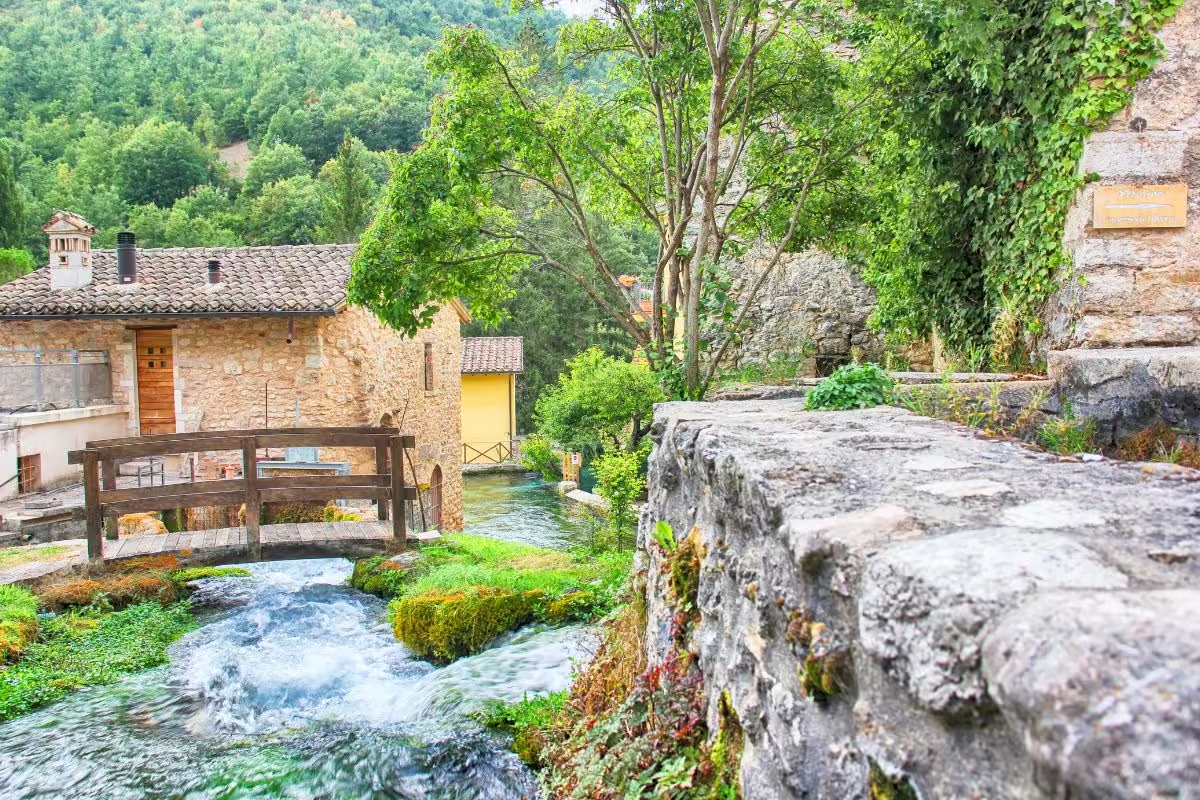
Finding the right place to stay in Umbria can significantly enhance your travel experience. The region offers a range of accommodations, from cozy bed and breakfasts to luxurious hotels.
For a truly local experience, consider renting an apartment or a villa. This can be both cost-effective and potentially rewarding.
| Pro Tip: Reserve your accommodations well in advance if you plan to visit during peak season – summer and spring are considered peak in Europe |
Where To Stay in Umbria
Staying in a villa or an agriturismo was one of the best decisions I made when visiting this region. These historic homes gave me something I knew I wasn’t going to get elsewhere; a closer, deeper look at Italy’s rich culture.
It’s worth a stop to make, especially if you’re in for a long-haul trip. These homes make you want to get away from the hustle and bustle of life.
I enjoyed maximum comfort and hospitality, and I always woke up to rolling hills and the smell of fresh morning hills. You can’t place a price on that experience.
Engaging with the Locals
Interacting with the locals is a core part of any slow travel Umbria plan. So, one of the first things I did was make sure that I joined only local-led tours.
Not only did this expose me to an unfiltered insight into Umbria’s art, culture, and history, but it also helped me contribute to the local economy directly. What’s more, I got to make valuable connections with the people.
I heard stories regular tourists wouldn’t have and got very useful pointers on how to make the most of my time in the region.
Thanks to this, my trip to Umbria was more fulfilling and rewarding. For the relatively short time I stayed there, I didn’t feel like I was just another visitor, but an extended member of the family.
Seasonal Experiences: The Best Times to Visit Umbria
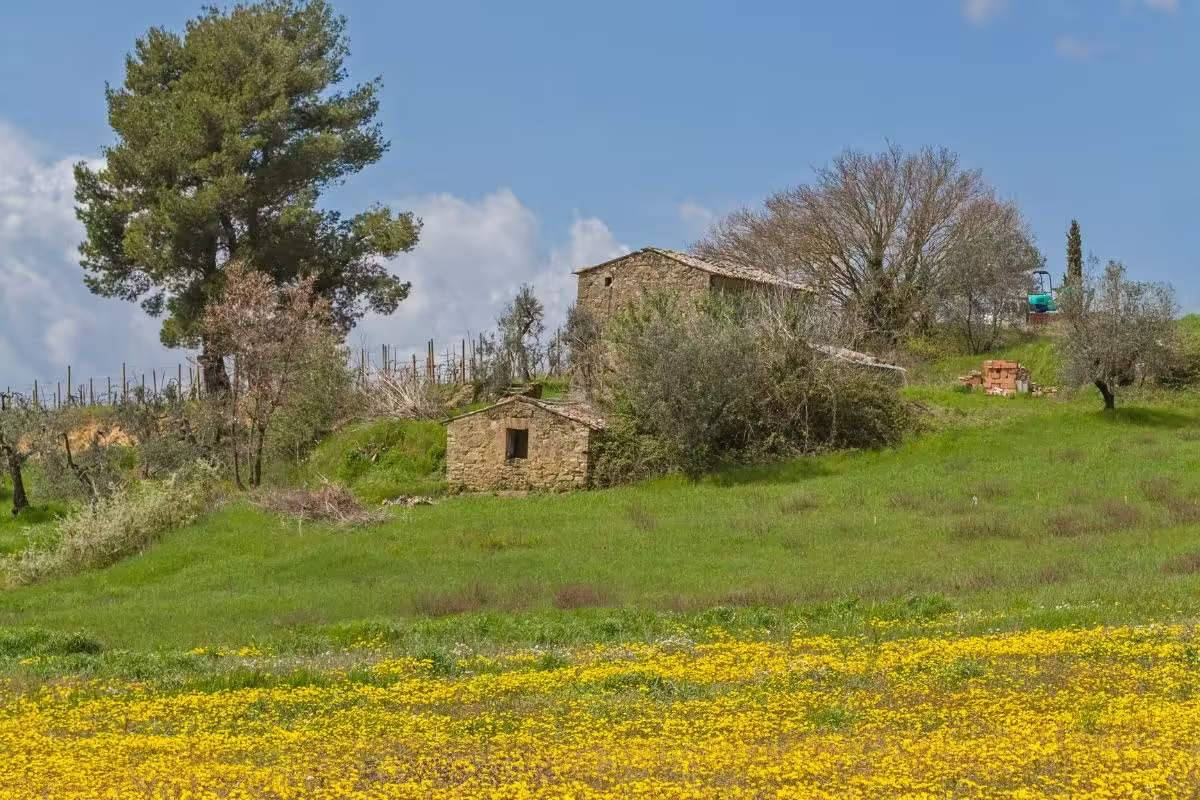
The different seasons each reveal a unique aspect of this region. I visited in spring and the revival of nature did a lot to influence my stay.
Spring in Umbria: A Revival of Nature
April to May marks Spring in Umbria and it’s a lovely sight to see. The valleys and the hills burst into a thousand colors, and the air smells like sunshine.
For someone whose days are reasonably packed with outdoor activities, it was just perfect for me!
Also, although this region doesn’t see as many visitors as other parts of Italy, the tourist traffic is even lighter during this time. So, you get to have more of these scenic landscapes to yourself if you visit in spring.
Spring is also the time for festivals. So, you’ll not only get the best of the local culture and heritage on full blast, but you’ll also get a taste of the finest cuisines, too!
For photography and painting enthusiasts, you’ll find lots of inspiration during springtime. I tried my hand at painting, and I loved how the transitional light of dawn made the world around me glow.
Spring is also a great time to travel. Not only will the scenery be more vibrant, but the cooler temperatures mean you won’t be as stressed. Remember, while the allure of Umbria in the spring is undeniable, it’s sensible to pack layers as temperatures can fluctuate.
| Pro Tip: Always carry a waterproof, lightweight jacket. I can’t stress how many times it saved me during my slow travel to Umbria. |
A Peek Into Umbria’s Gems

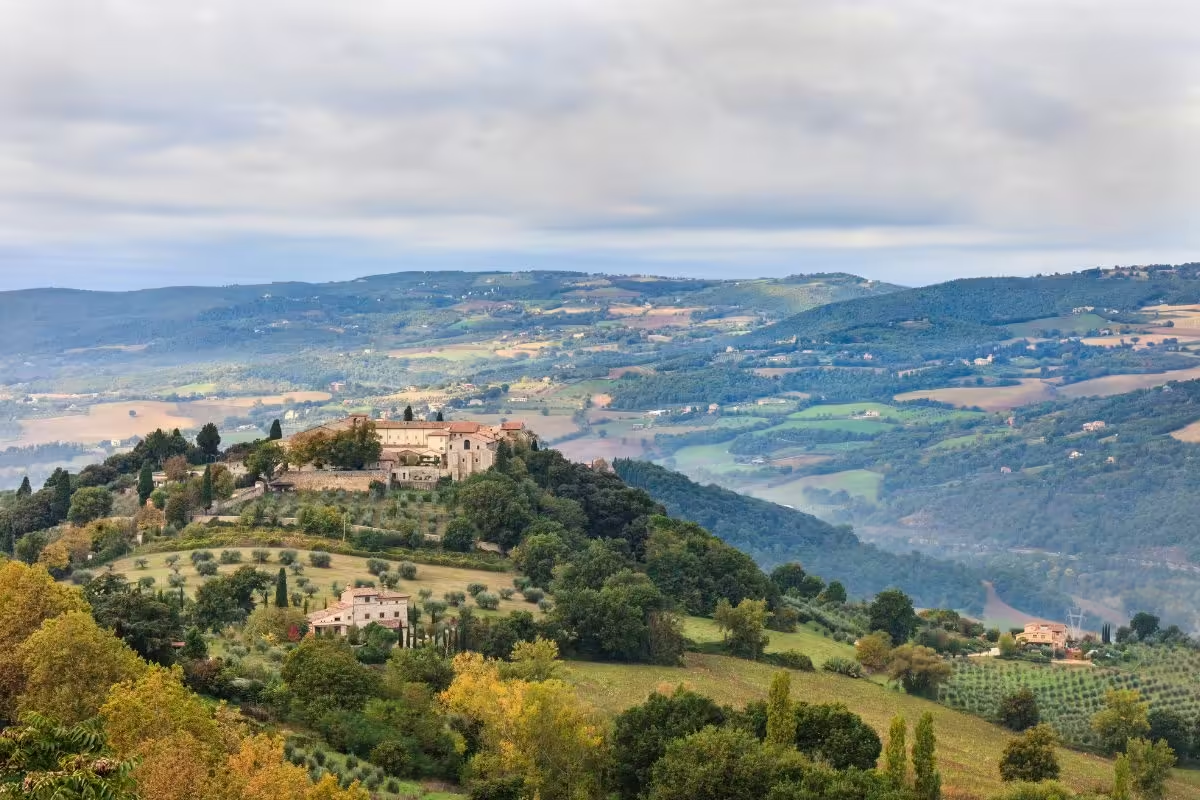
| Copy my curated Google Maps for Umbria’s best places to visit! Save to your Gmaps and start using on-the-go! |
Specialized Travel Options in Umbria
On this side of Italy, the journey is every bit as rewarding as the destination. This alone made my journey wholesome. Also, once in a while, I like to kick back and relax so I’d hire a local tour to plan for me.
Slow Travel Tours – Is It Worth It?
Slow travel tours are one of the best ways to explore the wonders of this region.
Some areas are inaccessible via public transport, which means hiring a car is the only option.
But not everyone wants to hire a vehicle – for many reasons. Lack of confidence in driving, budget for transport expenses, and many more.
Or maybe you just like meeting like-minded people through these tours.
For instance, through a small group tour, I met many artisans, discovered traditional practices and became one with the local community.
Several of these tours available, helping you focus on everything from art to cuisine, all at your own pace.
Agritourism: A Blend of Agriculture and Tourism
The concept of agriturismo has taken a firm hold, where experience and authenticity rule. Agriturismo Mandorli is a shining example, with its natural Umbrian beauty and unique experiences.
You’ll be able to stay on the working farm, enjoy farm-to-table meals, and multiple one-on-ones with many locals. Of course, several other great accommodation options ranging from castles to country houses.
The BBC Travel feature on ‘Slow Umbria’ highlights the region’s nearly 200,000 beds available across various agriturismos and rural lodgings. This shows how huge the agritourism scene is in the region.
But if you are a planner and love to control your expenses, creating your own itinerary helps you gain control.
To make your life easier, download my digital planner here and start plotting your ideal trip! The list of things to do and places to see below serves as a guide. Feel free to adopt and adapt accordingly.
| Download my Notion travel planner here. I used this planner for every trip I planned and it worked wonders even when I was planning a trip for my fussy mother. I like my planner simple and flexible, yet accessible on my laptop and phone. To use this template, make sure to duplicate a copy. Enjoy! |
Umbria’s Natural and Historical Tapestry
Umbria has a rich natural beauty steeped in ancient history. Each glimmering landscape has a story to tell and blends almost seamlessly with the modern world, too.
The Green Heart of Italy
Umbria has an abundance of rolling hills, lush greenery, and beautiful natural landscapes. I understand now why it’s so fondly called the green heart of the country. Natural beauty aside, the vast amount of carefully structured agricultural preaches also adds to the charms of the region.
Time Capsules: Roman and Etruscan Heritage
Few regions in the entire world have more Roman and Etruscan sites than Umbria.
Walking around places like Todi felt like time travel as there were just so many artifacts and archaeological structures that radiate the essence of that bygone civilization. I investigated many of these extensively as they showed me just how complex the history of this Italian region is.
Discovering Enchanting Towns and Villages
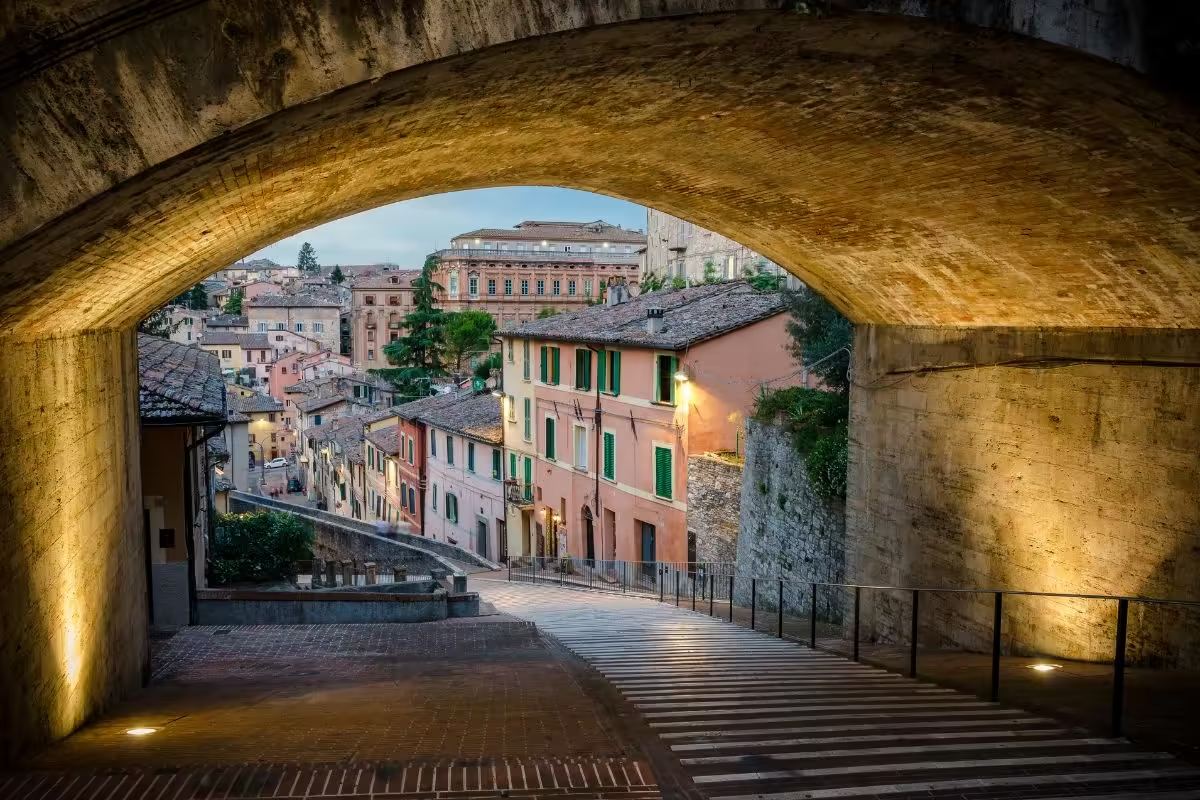
Umbria has remained an undiscovered gem because its more popular neighbors (like Tuscany) take all the attention.
But that’s not such a bad thing because it ensures that Castiglione del Lago, Orvieto, Spello, and all the other wonderful treasures of Umbria remain free from overtourism.
The Allure of Small Towns
Many travelers tend to think that if a destination isn’t extensively featured on Google, it’s not worth seeing. Yet, nothing could be farther from the truth, and no region highlights this better than this part of Italy.
Slow traveling in Umbria will show you wonders like Assisi, Montefalco, Spello, and Norcia. These are only some of the small towns in the region that rival and even exceed their more popular counterparts in many ways.

For example, Assisi is a UNESCO World Heritage site, with massive religious significance. In addition, it also has a plethora of medieval streets just ripe for exploration. The highlight of my trip to the region was the town’s basilica.
Then there’s Montefalco, the wine capital of Umbria. Also known as the Balcony of Umbria, I had the best time walking through vast vineyards in the evening sun.
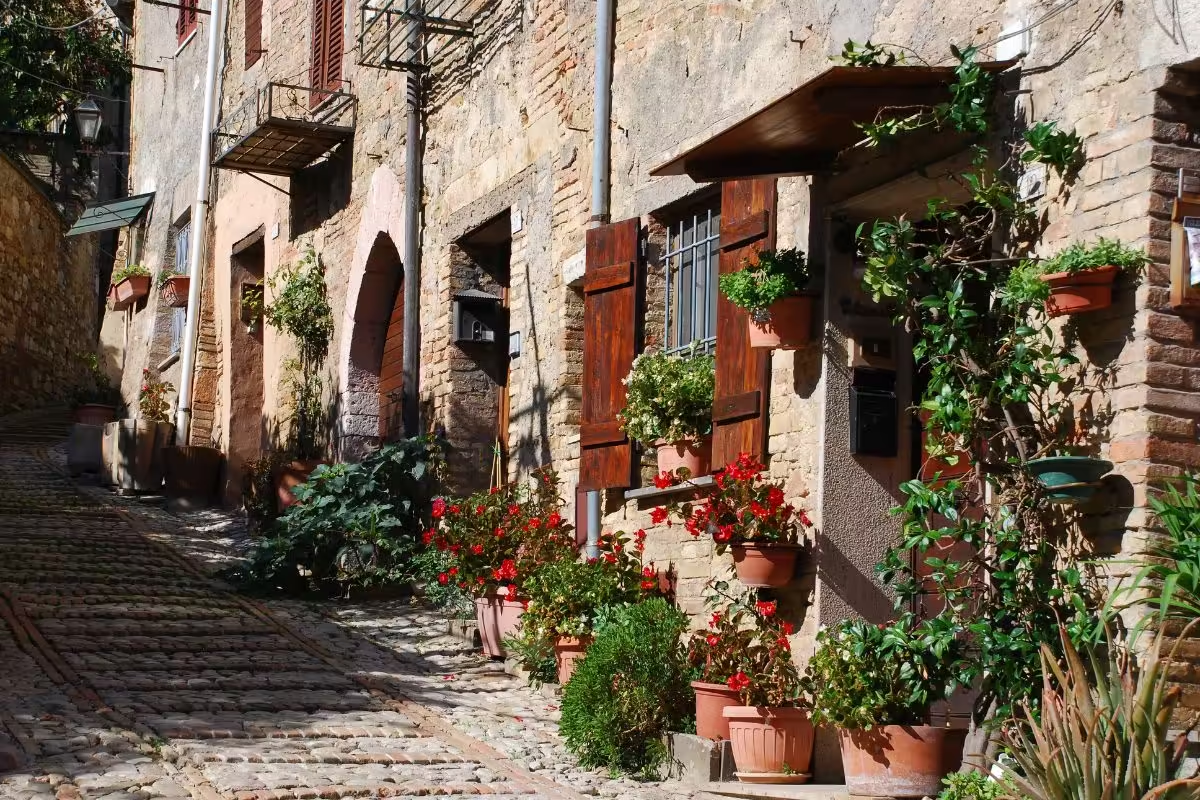
I’ll never forget Spello’s flower-lined streets or the intricate mosaics scattered all around the town. It was like walking through a live-in garden. Lots of little taverns, restaurants, quaint cafes, and wine bars along the street where you get to sit and relax for the day.

Todi was also on my slow travel itinerary, and it gave me plenty to love about this hilltop town. If I wasn’t checking out the different Roman and medieval architecture all around the town, I was taking cooking classes, and I loved every moment of it.

Norcia was rather pleasant, too. I got to discover much of the history of the town at the Norcia Museum Complex. I especially enjoyed seeing the Museo Civico artifacts as it remains one of the most well-preserved medieval works I’ve seen to date.
However, I took a day to spend most of my time outdoors at the Sibillini Mountains National Park since it’s nearer to Norcia. There’s something about that air that makes you want to hike the entire expanse of the mountains.
Historic Villages: A Trip Through Time
I could never slow travel Umbria and not visit Orvieto. I just had to see Duomo di Orvieto; Cattedrale di Santa Maria Assunta for myself.
A friend had come around a few years ago and he spoke so highly of the 14th-century cathedral, I had to see what all the hype was about ancient Roman.
The level of attention that clearly went into everything from the pier carvings to the facade, alabaster windows, and even the baptismal font is astounding. I couldn’t recommend this place highly enough.
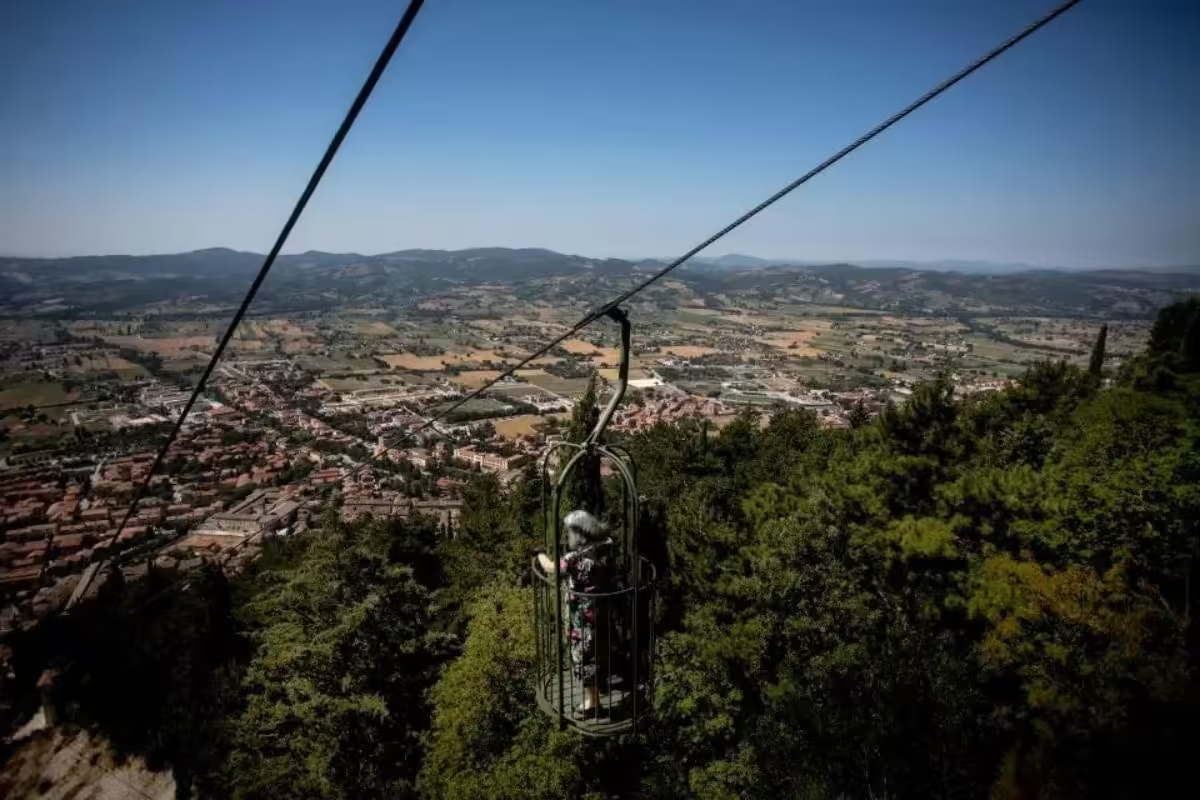
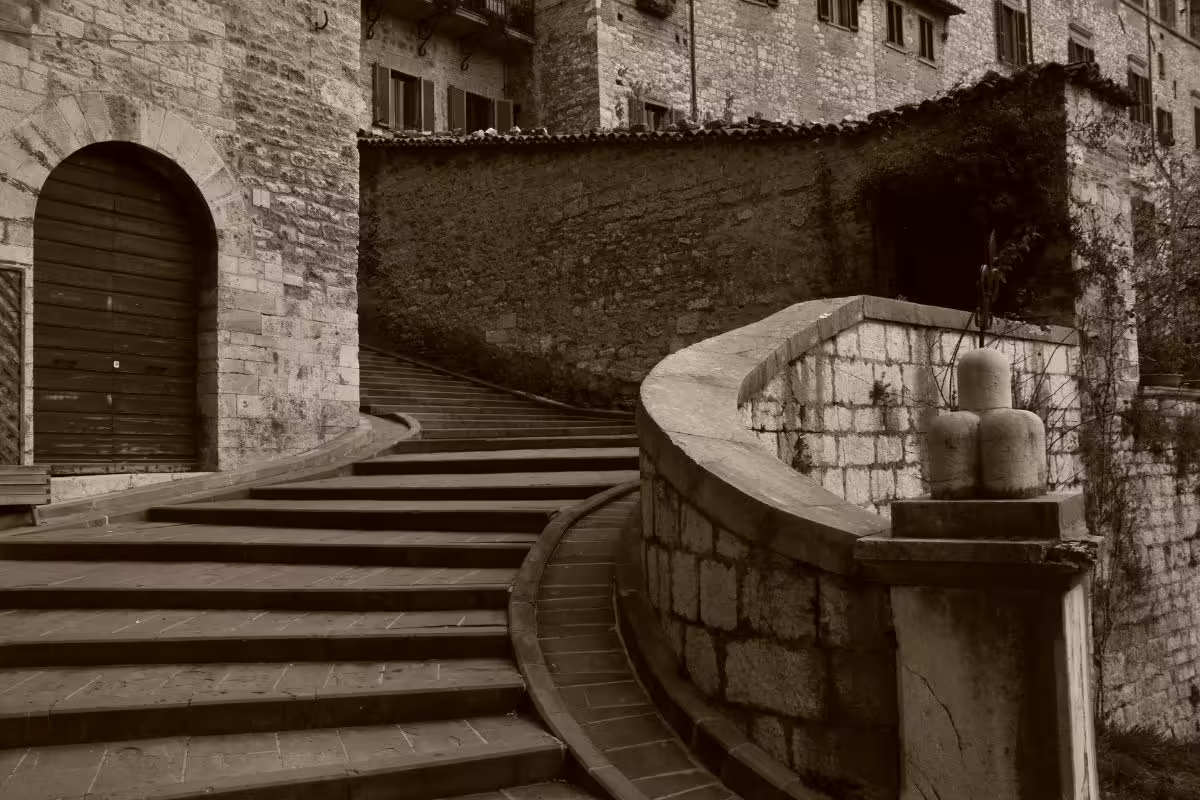
Gubbio was another place I simply had to see. As one of the oldest villages in the region, the quaint charm of this place was immediately obvious. But I’d find that it was also perfect for exploration, too.
I cycled to cool spots like the Piazza Grande e Pallazo dei Consoli and spent a little while at the Castello di Antognolla, too.
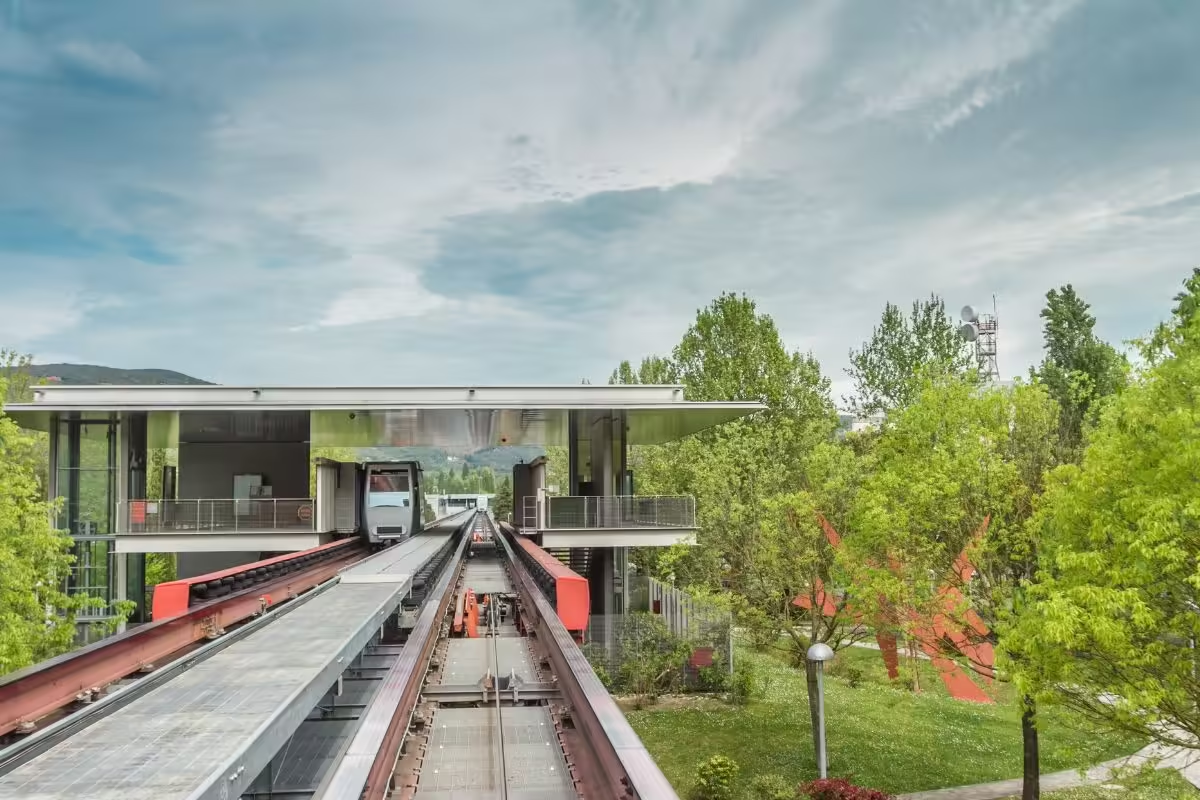
The easiest and quickest way to see Gubbio is to explore this part of the town with the birdcage-life cable car called Funivia Colle Eletto, a funicular ride from the summit of Mount Ingino.
There’s also a cafe at the top of the hill by the Funivia station, but you can take it slow and spend your day with a picnic. A return ride costs 6 euros.

I wasn’t very sure how things would go when I included Spoleto in my slow travel Umbria itinerary.
Looking back now, I’m glad I did. I’m not sure I’d have been able to forgive myself if I later found out I was so close to a treasure trove of Renaissance art and Roman architecture and I didn’t see it. I got to see the Mauri Palace, Museo Archeologico, and Ponte delle Torri.
I couldn’t stay for the Festival dei Due Mondi, one of the biggest celebrations of music and opera in Umbria. I did console myself with a great show at the famous Teatro Romano though.
Culinary Delights: Umbria’s Gastronomic Treasures
Every meal is a tribute to local traditions in Umbria. The ingredients for most dishes are sourced from nearby farms, further adding to their richness and originality, creating a much-desired slow food movement around Europe.

Local Food and Wine Excellence
The Sagrantino di Montefalco Is the signature wine of the region. The robust red wine boasts rich, deep flavors that pair perfectly with most dishes, be it roasted meats or spicy stews.
Slow traveling around Umbria helped me discover another classic though: the Orvieto Classico. I’ve never had white wine so refreshing.
The aroma, structure, flavor, and powerful finish of the wine hit all the right notes with me. At the risk of sounding like a glutton, I could plan a return trip exclusively to savor these pleasures again!

Umbrian Olive Oil: Liquid Gold
I’m no stranger to virgin olive oil, as some of my best recipes require this special ingredient. However, I was quite impressed by the sheer quality of the extra-virgin varieties I found at Trevi.
It looked like liquid gold and helped me finally understand why the dishes in the region always tasted so good. I tried it on wild asparagus, and its vibrant flavor was beyond description.
Cheese, Truffles, and More: Ubiquitous Flavors
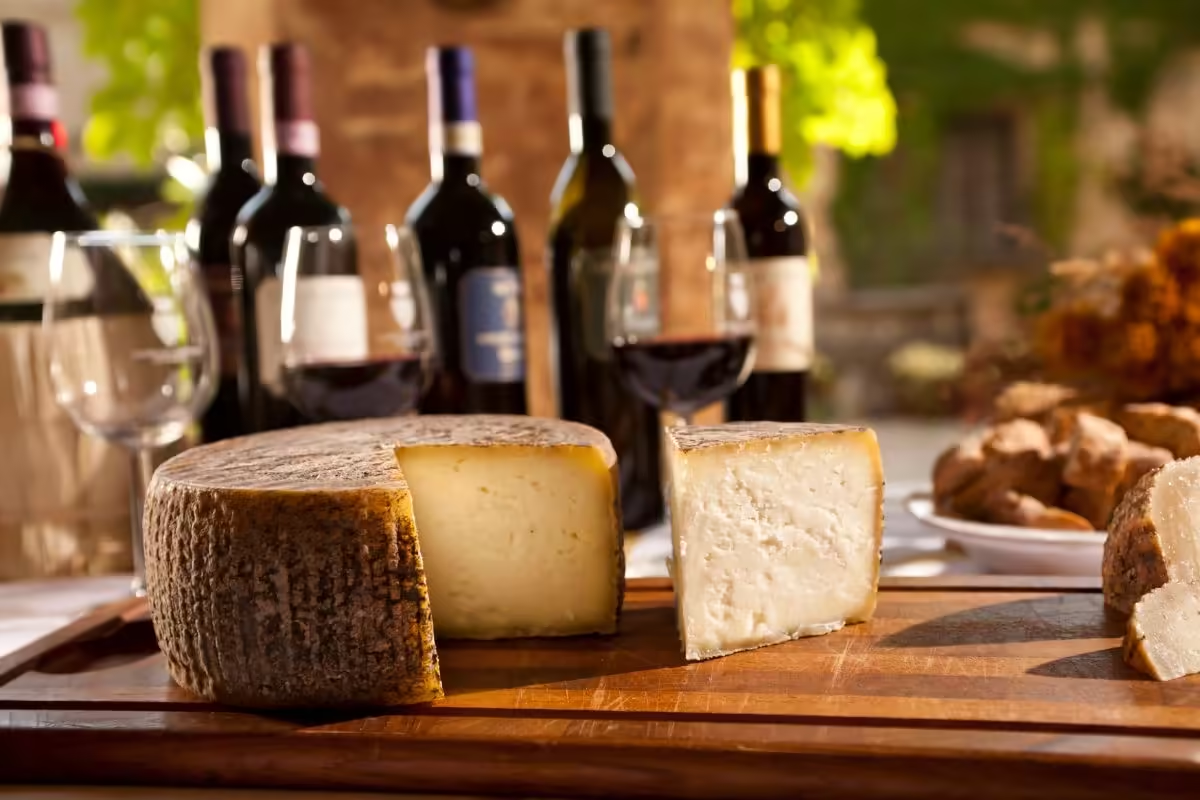
Umbria’s cheeses should be deemed a national treasure. My favorite is the delicate Pecorino di Norcia. Made from sheep’s milk, it’s a delight to eat whether taken alone or paired with the region’s signature cured meats.
I’ve also got only good things to say about the truffles, most especially the black and white variety. The aroma alone made them worth my slow trip!
And, who visits Italy without trying out the paste?! I know it sounds a little cliche, but Umbria has mastered the art of turning pasta into a full gourmet food.
For someone who’s a fan of pasta, I never thought there was a perfect pasta more than the one I had in Umbria!
The best traditional pasta dish I had was the Lumachine alla Schegginese. I also had the chance to sample the Pasta alla Norcina and I promptly flip-flopped on my earlier decision!

Umbria’s Artistic and Architectural Wonders
There’s so much artistic and architectural beauty to explore. So, I had to narrow my itinerary considerably.
Renaissance Art and Frescoes
Umbria’s wealth of Renaissance art and frescos were a top must-see for me. I couldn’t help but be enthralled by the artistic heritage evident at the Basilica of St. Francis in Assisi.
The frescos that adorn that sacred place tell stories of Saint Francis, capturing the essence of his teachings. These are undoubtedly among the finest works of artists Cimabue and Giotto.
| Recommended tours: 1. Assisi and Spello Full-day Tour 2. Spello Old Town Walking Tour |
Museums and Pilgrimages
Umbria has over 500 museums, ensuring that much of the region’s history and culture is immaculately preserved. It also means that, no matter how limited you make the scope of your slow travel, there’ll always be a historical site near you to explore.
If you’re on a pilgrimage, Umbria’s spiritual heritage ensures you’ll feel right at home in the region. Many cities here not only feature stunning art but also noteworthy lessons from Saint Francis, the first to receive the stigmata.
These works can serve as an inspiration to uplift and support you during your spiritual journey.
Frequently Asked Questions About Going Slow In Umbria
Here are a few commonly asked questions to help plan your journey. Each query aims to ensure a rich, immersive experience in Italy’s lush heartland.
What are the top attractions to visit for a complete slow travel Umbria experience?
I recommend seeing the medieval charm of Perugia and the rugged beauty of Castelluccio (linked in my Umbria list). These sites explore the natural splendor and history of the region expansively. You should also visit Lake Trasimeno and sample Assisi’s rich spiritual experience.
Can you suggest a week-long slow travel Umbria itinerary?
Start your journey in Perugia and spend a couple of days in Assisi for its mystical ambiance. Then, visit the hill towns of Spoleto and Orvieto.
What’s the best way to experience the local culture while slowly traveling through Umbria?
I recommend immersing using public transportation, staying at a villa or agriturismo, and engaging the locals at every opportunity. Also, use public transportation more and consider hiking or cycling as this will connect you more closely to the region.
What’s the best way to engage local artisans and producers when I slow travel to Umbria?
I advise visiting artisan workshops and family-run farms. You can reach out to these places directly or have a local tour guide make the arrangements.
What are some recommended accommodations for a slow travel stay in Umbria?
For an authentic stay, seek out agriturismos—working farms offering lodging—or boutique hotels found within restored historic buildings. These options offer the best authentic taste of life as a local in Umbria.
How accessible are the rural areas of Umbria for slow travelers?
Umbria’s rural areas are quite accessible, with reliable public transportation to major towns and rental options for bicycles or cars for more remote locales. However, always plan ahead, as the connectivity might vary, and some of the most picturesque areas are slightly off the beaten path.

I always look forward to reading your posts. They’re so full of value!